Transcript
Search it, or tap a time to listen from there.
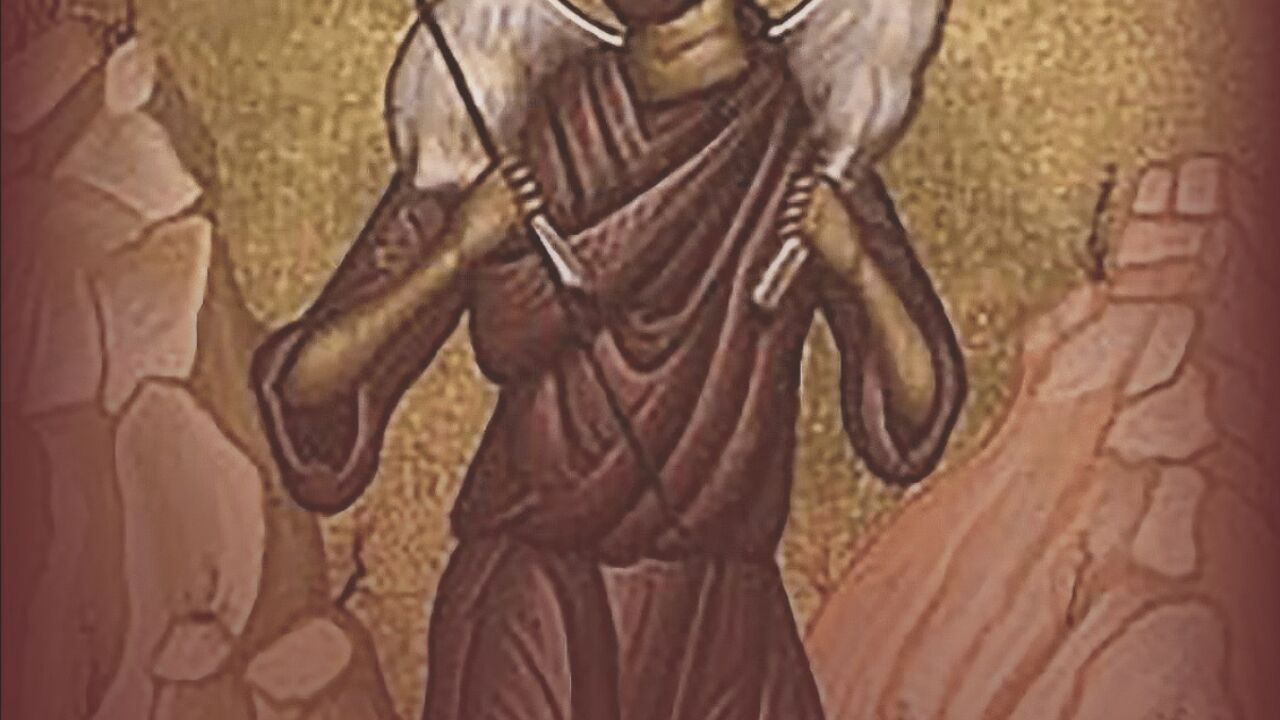
It's not a typo. We're going to be looking at the same passage we looked at last week from John 10. You can find it on page 1065 in your Pew Bible, so you can go ahead and grab that now. And now this is my chance to give my intro story about a shepherd and some sheep. Now, I don't know a mythical couple from the north named the Finnefrocks.
I assume they're real, but I don't know them personally. But I do have what I think is a somewhat mythical story about sheep that happened this summer. So my family and I had a once-in-a-lifetime opportunity to travel to the United Kingdom, and as part of that, this summer, we got to spend some time in the highlands of Scotland. And I found myself walking on this little road all by myself with these incredible, lush, rolling Scottish hills, slowly rolling up and up and up until they just wandered into the clouds. It was easily one of the most beautiful and definitely the most remote place I've ever been in my whole life. The only thing I could hear was the wind passing by, the water rolling out of the side of the hills, and the bleeding of sheep. Sheep everywhere, scattered over the hills like salt. And then as I walked, I saw this pickup truck come down the road,
park on the side, and a single, lone shepherd walked out. And he ran to the top of the first little hill, and he started calling out to his sheep. And every single sheep that was within earshot immediately turned and started making their way down the hills towards the sheep pen that was just a few hundred yards away. But there were these other sheep that had traveled so far up into the hills that they could not hear the voice of the shepherd. And so the shepherd slowly started making his way further and further up the hill, and I could hear him calling out to his sheep until he had gotten high enough and far enough that every single sheep on the hills started responding to his call and coming into the sheep pen. And as I watched this, it just instantaneously turned into a prayer. And I thought, Lord, there have been so many times in my own life where I've been like one of those sheep that has wandered so far up into the hill
that I lost track of your voice. And every single time you have sought after me, and you found me, and you have called out to me until I heard your voice, and you've called me back home. So we could pause right there, and we could do an entire sermon on the voice of the shepherd. It's one of the many beautiful things that are in this passage, how we as sheep of the good shepherd, we need to know his voice. We need to be able to distinguish it from the voice of false shepherds. It's why as Christians we spend so much time in our Bibles, so that we would learn the voice of the shepherd. But I'm actually not going to preach on that, so we might need a third sermon on this passage. What I noticed as I watched that shepherd is that there was only one. It was his job to call each and every single sheep home.
They needed to hear his particular voice. Last week, Father Matt spoke about the authority Jesus is claiming in calling himself the good shepherd. This morning, I want to highlight that that claim of authority is exclusive, because sheep can only have one shepherd. We can read this passage in isolation, sort of like Jesus took his disciples away on a weekend retreat, and as they bask in the sunshine, they hear this comforting message from their leader. But that's not actually the context in which the Apostle John places this story in the Gospel. In the preceding chapters, there's been this growing tension between Jesus and the Pharisees. And it all comes to a head in the previous chapter, in chapter 9, when on the Sabbath, Jesus heals a man who was born blind. And this enrages the Pharisees. They cannot accept that this has been an act of God. And at the end of the chapter, Jesus calls out their own spiritual blindness.
And right after that, we get this story. We get his proclamation that he is the good shepherd. Jesus is distinguishing himself from the Pharisees. Father Stephen was just reminding me this morning that that word good, for good shepherd, perhaps can be most perfectly translated authentic. Jesus is the authentic shepherd. And he's making a bold and exclusive claim. I am the good shepherd. I am the
shepherd. For the people of Israel, the image of a shepherd was directly connected to their historic view of their king. David, perhaps their greatest king, was first a shepherd. And the Old Testament is full of prophetic promises that the Lord would raise up a leader who would shepherd his people. And Jesus is drawing on these promises at this very moment. Specifically, he's leaning into the passage we heard read this morning from Ezekiel chapter 34, where the Lord first rebukes the false shepherds of Israel who have been feeding themselves instead of the sheep. And then the Lord makes this promise in Ezekiel 34, verse 15. He declares, I myself will be the shepherd of my sheep.
And just a few verses later, he makes what almost sounds like a contradictory promise. I will set up over them one shepherd, my servant David, and he shall feed them and be their shepherd. Okay, so which is it? Is it the Lord himself who will shepherd his people, or is it a future human king in the line of David?
Ezekiel doesn't answer that question for us. But it's here in our passage from John that these two images of the shepherd come together in one person, in Jesus, fully God and fully man, the exclusive and authentic good shepherd that the Lord has been promising.
And just a few verses later in the gospel, after what we read, Jesus clarifies this claim even more, even further. And at that point, the Pharisees pick up stones and they're ready to kill him for what he said. Jesus caused a scandal in his claim to be the good shepherd. It's not a position that he's ready to share with anybody else. Our passage this morning is full of definite articles and exclusive claims. Verse seven, I am the door to the sheep. Verse 11, I am the good shepherd. Verse 16, they will listen to my voice and there will be one
flock, one shepherd. Sheep can only have one shepherd. And of course, this claim is still a scandal today. The world often takes offense at the exclusive claims of Christianity. But Jesus is the good shepherd. That word can also be translated beautiful. He is the beautiful shepherd. He's the only shepherd we would ever want to follow. Last week, we looked at the beautiful reality that Jesus, the good shepherd, was willing to lay down his life for his sheep. And this morning, I want to continue to explore. I want to explore further from this passage how Jesus' exclusive role as the good shepherd is good news. In fact, it's beautiful news for everyone, for those who are near, but also for those who are far off.
So right off the bat, we should start with a clarification because this claim of exclusivity, it has to do with the shepherd because sheep can only have one shepherd. But who can be a sheep? How far does the love of Jesus extend to the whole world? John himself says it several chapters before in his own gospel. God so loved the world that he gave his only son that whoever believes in him should not perish but have everlasting life. Jesus' exclusive claim as our shepherd is beautiful news for all the sheep. So this morning, let's look at John 10. And in the first half of our passage, let's see the beautiful news for the sheep who are near through this image of the one door. And then in the second half, let's see the beautiful news for the sheep who are far off through this image of the one flock. So first, the one door, starting in verse 7.
Truly, truly, I say to you, I am the door of the sheep. All who came before me are thieves and robbers. But the sheep did not listen to them. I am the door. If anyone enters by me, he will be saved and will go in and out and find pasture. If you're like me, perhaps you've been confused about this door image that Jesus uses. Jesus is the door. Jesus is the shepherd. Now, it's true that Jesus did like to use mixed metaphors about himself sometimes. I give the bread. I am the bread. But in this case, as he describes himself as the door, he's actually describing part of the role of being the shepherd. Many Eastern shepherds would bring their sheep into the sheepfold. And once they were all inside, the shepherd himself would lie down in the gateway acting as a human door. So why would the shepherd do that? Why not just build a really strong door
with a really good lock? Well, first of all, it's the best way to keep thieves and predators out. Jesus refers to these thieves in verse 10 who come to kill and to destroy. In verse 1, he also mentions that they will try to climb in by another way. They'll try to get around the door. But if the shepherd himself is there on guard, then nobody and nothing else will be able to get to the sheep without first going through the
shepherd. And when the shepherd is the door, this also provides a sense of security for the sheep. They see their shepherd lying in the entryway and they're not tempted to wander or to worry. They can simply rest secure with the knowledge that their shepherd is right there watching over
them. So many years ago, when my son, Zach, was two, we moved him out of his crib and into his big boy bed. He's still doing a great job in that bed. But that first night we tucked him in and we prayed for him and we closed the door and we headed down the hallway to our own room. And then a few minutes later, we heard the door latch. We heard the little feet running across the hallway and there stood Zach in our doorframe, just smiling, staring at us. It wasn't like he really needed anything. It's kind of like he just wanted to know where we were, what we were up to. So we tucked him back in his bed. We said, now stay in your bed. And we closed the door and we went down the hallway. A couple minutes later, we hear the door open and there he is again. So after like two nights where this happened roughly
37 times each night, I realized that the door itself was completely useless. So instead of closing the door, I grabbed a book and I myself sat right in the doorframe of his room, right where he could see me. And it's amazing. Two things happen. Zach calmed down and he fell asleep. And I read an entire biography on Abraham Lincoln in a very short period of time. And I'm going to read it to you now. A shepherd acts as a door so that the sheep can rest secure within a sheepfold.
Verse nine. I am the door. If anyone enters by me, he will be saved and will go in and out and find pasture. The That's Jesus' picture of the abundant life that he offers in verse 10. As the door, Jesus offers a place of safety and refuge that you can go out from and you can always return to. Psalm 121 says, the Lord will watch over your coming and your going from this time forward and forevermore. It's also interesting that the word Jesus uses for sheepfold in other places in the gospels is translated as a courtyard or a place of gathering. And amidst this controversy Jesus is in with the Pharisees, I can't help but hear overtones of the temple courts where the people of Israel gathered for prayer and for worship.
Jesus is the doorway into the dwelling place of worship, providing a place of refuge for God's people. How happy, how safe, how secure is the church that has Jesus as its door, not letting anything in that doesn't first go through him, resting secure in the unwavering protection of the good shepherd.
Happy are the people of the church who are sent out into the world in peace, rejoicing in the power of the spirit, knowing they can always return and find refuge and rest. Through seasons of abundance and through the very difficult ones, how good it is to be a sheep who stays near to Jesus the good shepherd. He's always watching over you.
He's watching over you as you go out, out to that difficult work dynamic, out to that broken or hurting relationship. He's watching over every ongoing struggle in your life and he's constantly calling you back, back to his side and back into his house to find rest and comfort under his protection. Okay, but what about those who don't know that to Jesus? Perhaps they felt like they have a strange or even non-existent relationship with him. Perhaps they grew up in a cultural or religious background where they never heard about Jesus. The good news is that the good shepherd's heart also extends to those who are far
off. Let's look at this image of the one flock that you can find in verse 16. There's so much packed into this one verse. Jesus says, I have other sheep that are not of this fold. I must bring them also and they will listen to my voice. So there will be one flock, one shepherd.
So first off, the immediate context is that Jesus, he's speaking to a predominantly Jewish audience and he's claiming that his role as shepherd reaches out beyond the Jewish people to the surrounding Gentile world. Now this would have been offensive to some of the Pharisees who were so protective of the exclusive position of their nation as God's chosen people. But Jesus is not shifting his role as shepherd away from the people of Israel. Rather, he's expanding the size of the flock to include all peoples. That's because there is an inherent beautiful diversity in the kingdom of God. People of every tribe, tongue, and nation find their way to a unification around Jesus. All of them called by the one true shepherd, all a part of one flock.
Notice how Jesus says, I have other sheep that are not of this fold. Jesus puts his claim on those who are not even yet his followers. He already considers them his sheep. So just pause for a moment and reflect on what this means. Because each and every person in this
who does not yet follow Jesus. Jesus has put his loving claim on sheep who are not yet a part of his flock and on those who may have wandered away. They are his, Jesus says. And Jesus makes it clear that he's giving himself the active role of pursuing them, trying to get close enough for them to hear his voice. That day after we took, I took my own walk along the sides of the hills, our whole family came back to the same spot. And we decided to trek all the way up to the highest point on the top of the hills.
And it took us a really long time. But as far, however far we walked up the hills, we kept finding these little clefts in the side of the hill. And we'd find these pieces of sheep's wool stuck to the rock on the top on the clefts. I kept thinking to myself, how long did it take that shepherd to get close enough to this spot? All for the sake of calling one single sheep back into the fold.
If you're here this morning, and you're not a follower of Jesus, I want you to know that Jesus loves you. And he is pursuing you. He would climb to the top of any hill. He would go to the ends of the earth. In fact, he's laid down his life for you, that you might receive forgiveness of your sins, that you might be welcomed into that abundant life he desires for all his sheep.
Jesus' voice is calling out to you through his word, the Bible. And he has this way of orchestrating moments in your life where he hopes that you will hear him speaking directly to you, calling you by name. Maybe this morning is one of those moments, and he's hoping that you will respond and that you will follow him.
Last Sunday, Father Matt spent some time in verse 17, talking about how God the Father loves Jesus, his son, and how they share a love for all the sheep, all the people of this beautiful and broken world. And because of that shared love, the Father has given Jesus the exclusive calling to be the Good Shepherd. And Jesus' love is unbounding and unending for all his sheep. He watches over those who are near, and he is seeking out those who are far off, and he is calling all of them into his one great flock.
So whether you feel like a sheep that has been living near to Jesus, the Good Shepherd, or one who feels like you're a great distance away, my prayer for you this morning comes from the psalm we read together. Oh, that today you would hearken to his voice. In the name of the Father, the Son, and the Holy Spirit.
Amen.
Jesus, Our Good Shepherd
3 sermons
- All We, Like Sheep, Have Gone Astray
Texts: 1 Timothy 1:12-17, Psalm 80, Luke 15:1-10
- We Have an Authority Problem; and How to Fix It
Texts: Isaiah 53:1-10, Psalm 138, John 10:11-18