Transcript
Search it, or tap a time to listen from there.
So I wanted to talk to a real shepherd about shepherds and sheep since we're in this three-week series on Jesus the Good Shepherd. And who do you think I would reach out to? Willis Finnefrock from Barnum, Minnesota, who was the farmer. And amazing, Willis and Kay, good friends of mine, I still keep in touch in, live six miles east on County Road 6 of Barnum, Minnesota, population now almost 600 people. So anyway, I called Willis and it was actually Kay jumped in with this story. She said, one day, Betty Carlson and I were out to lunch in town and we came home and don't you know, those sheep were like all over the place. They had found a way out and they followed each other out and we're trying to get them back in and they're just not paying any attention to us. And then her son, John, who is now has 50 sheep on his farm right next door, drove in
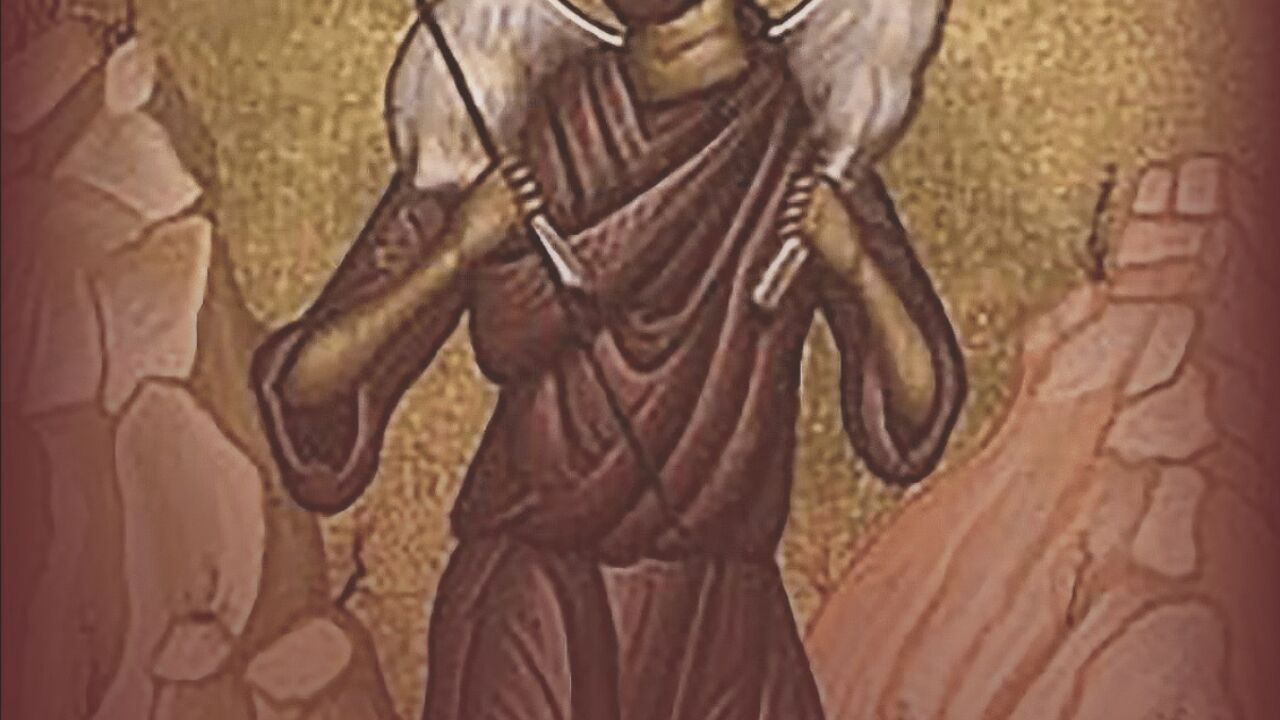
his pickup truck, got out and just said one thing to those sheep. And they all of a sudden looked up, they looked at John and they followed him and they went right back into the pen. So when Jesus says, my sheep, listen to my voice, he was talking about a real thing. He's talking about the authority of the shepherd, that shepherds are not just nice. They not only protect, they maybe cuddle with their sheep and they help them and shear them and all things like that. But they're also the ultimate authority figure for the sheep. So when Jesus said in our gospel reading that you heard in John chapter 11, John chapter 10 verse 11, I am the good shepherd. That is a statement of authority.
Boom, I'm the good shepherd, not one of many good shepherds, I'm the good shepherd. It's one of the I am statements that are sprinkled throughout the gospel of John. I am the water of life. I am the light of the world. I am the resurrection and the life. And you'll notice that Jesus does not say like every other religious leader, I point to the way, I point to the truth.
Jesus says, I am the way and the truth and the life. It's a statement of ultimate authority. Now if you're anything like me living in the culture that we live in, we have a hard time with authority figures. We have a hard time trusting because many authority figures in our lives and in our world have let us down. They have done things that have made them untrustworthy. So you think anywhere from politicians to pastors, to presidents, to the Congress, to big corporations, to tech platforms, to
celebrities and media outlets and the criminal justice system, these things have not only been imperfect sometimes, but they've been downright, they've failed us, they've hurt us, they've deceived and lied to us. They've used us for their purposes. And maybe you had somebody in your life that was an authority figure that did that to you and it really hurts. And sometimes it's just easier to make it really simple and to just say, the ultimate authority figure in my life is going to be me. I will be the ultimate authority figure. Now Pastor Tim Keller calls this the baseline story of the Western world over the last two hundred years. I trust in no external authority. I got to trust in me. I love the way an actress was interviewed in the Wall Street Journal. I won't mention her name, but this is what she said. She said, you need to look for your own truth. Daily ask, what do I need?
Because the only person who will know what works for you is you. Now I don't say that to make fun of her. I actually think that's a really insightful statement. I don't agree with it, but I think she's really captured the mood, the ethos, the milieu that we live in in our culture today.
So Jesus in this passage in John chapter 10, he's going to speak right into all of our suspicion, right into all of our mistrust, right into all of our hurt and fear around authority. And he's going to say, I have something way better for you than that baseline story of our culture right now. I have something way better than any authority figure you could ever trust. It's better. It's bolder. It's brighter. It's going to give you more joy living under my authority, submitting to my authority.
I want to invite you to turn to the Gospel of John, page 896, and it just, it is such a joy and a delight for us Sunday after Sunday to take a small passage of an ancient book, the Bible, and just to see how relevant it is for today, how much it speaks to our hearts, how it is living and active word of God for us today. And I want to say three things about authority in this passage. So first there's the redemption of authority. Jesus redeems and transforms our conceptions of authority. Second thing is the intimacy of authority that Jesus invites us into the intimacy of the living God. And then third is the invitation of authority. So let's look first at actually verse 10 in this passage, which kind of sets up Jesus's teaching on the good shepherd. Verse 10 says, the thief comes only to steal and kill and destroy. I came that they may have life and have it abundantly.
So when Jesus says, when I'm, Jesus says, when I'm talking about authority, I have good intentions for you. I want you to have life. I want you to have eternal life. I want you to have abundant life. I have no interest in crushing you, controlling you, manipulating you, using you. I want to give you life. And then in verse 11, he says, I am the good shepherd.
Now he's tapping into a stream in old Testament teaching that God is our shepherd. He's the shepherd of the people of Israel. Psalm 23 one, which many people know, um, the Lord is my shepherd. I shall not want or Psalm or Ezekiel 34, where God says, I'm done. I'm finished with all the fake shepherds. I'm going to be the shepherd of my people, Israel. So Jesus is standing up and saying, you know, that God you've heard about, I'm him in flesh incarnate right before you. We are one. No wonder he was controversial. No wonder people tried to shut him up and get rid of him. Now notice what he does. He contrasts himself with other shepherds who are unworthy of our trust. So in verses 12 and 13, he who is a hired hand and not a shepherd who does not own the sheep, sees the wolf coming and leaves the sheep and flees and the wolf snatches them
and scatters them. He flees because he is a hired hand and cares nothing for the sheep. Now you've been hurt by a hired hand. You've been hurt by a fake shepherd, a false shepherd. Know this, please know this. Jesus hates that more than you do.
Jesus hates that more than you do. He will stand with you. But notice that little phrase again. I am the good shepherd. It has, I can't take away the authority of that. There's a lot of authority in that, ultimate authority. You notice Jesus never comes to anybody in the gospels and he says, hey, I just, I just got a few recommendations I'd like to suggest to you if you're open to it, you know. And so why don't you give me your conditions and then we'll kind of work out something, you know. You notice Jesus never did anything like that. He always came to people as Lord. He said, you call me Lord and you call me teacher and Lord and so I am. And that's the only way he can come. So we talk these days a lot about, we want to be authentic. I have to be authentic to who I am. And that's not all bad, but, but you know, Jesus has to be authentic to who he is too.
Jesus says, I got to be me and me is the only way I come is as Lord and teacher. I don't come any other way. That's the way I need to come into your life. Now again, that makes us nervous. We might be manipulated. We might be controlled. We might be used. So how does Jesus take the concept of authority and redeem it, transform it? Well, notice verse, the second half of verse 11, he says, and I lay down my life for the Actually, he says that five times in this little passage that you heard, I lay down my life for the sheep. I lay down my life for the sheep. I lay down my life for the sheep. I lay down my life for the sheep. I laid on my life for the sheep five times in this little compact passage. He wants us to know the main thing on my job description on a shepherd, shepherds do a
job description is I laid on my life for you. I will take a bullet for you. I will stand between you and the wolves. And notice that little word for, because it's really important. It means on behalf of, as we say in our creed for us and for our salvation, he came down from heaven for us. He didn't just do it as a, as a moral example for us. He did it for us because sin is really this thing that's so disastrous. We can't get out of it ourselves. And we need someone to come on our behalf and save us from it. So the, the verse you heard in the first passage from Isaiah 53, all we like sheep have gone astray.
Each of us has turned to his own way. But the Lord has caused the iniquity, us all to fall on who him, his only beloved son. Sin is weighty. Sin is a thing. It's not just airy. It's not just, uh, it's, it is, has substance to it and has shape to it. And it has to go somewhere. You have to get rid of it. It's like a backpack filled with stinky garbage of your stuff or my stuff. And it won't just disappear. It has to be carried away somewhere. So in the old Testament, you have this very powerful story where the, the, um, sacrificial goat was the, the scapegoat, literally the scapegoat. The sins of Israel were symbolically put upon that goat and it was driven out into the wilderness. Sin is being carried away.
But in the new Testament, Jesus becomes our scapegoat. He becomes the one who bears that backpack of the stinky garbage. So we don't have to bear it anymore. He carries it away. That is for us. He dies for us and for salvation. He lays down his life for us. But then he, he gives us something else and that's the intimacy of authority. So Jesus isn't just like, I just want to lay my authority on you. No, I actually want a living, breathing relationship with you, a personal relationship with you. I want to be the final authority in your life, but I also want intimacy with you. There's this beautiful verse at the end of Genesis chapter two, the second creation story in the book of Genesis where it says, and the man and the woman were both naked and they were not ashamed.
What a beautiful picture of intimacy. So here's a man and a woman, a husband and a wife. They're in their pre-fallen state and they see each other in all of their glory and all of their beauty and they have no secrets and there is no shame.
Beautiful intimacy. We don't have that in this world because we're all distorted and we're all have baggage of shame and guilt and imperfection and flaws and sins and hurts. We don't have that. But God is saying, I want to invite you into that level of pre-fall intimacy with me. And actually there is intimacy within the Godhead itself, within the relationships of the triune God. So look at verses 14 and 15, I am the good shepherd. I know my own. I know you and my own know me.
Just as the father knows me and I know the father and I lay down my life for the sheep. There is intimacy with God himself and he invites us into that. Now there's only one way to know somebody. That person has to reveal herself or himself to you. They have to open themselves up and they have to disclose themselves. They have to communicate. I remember when I was living in Long Island, this is maybe 12, 14 years ago, I heard this theme from a number of people in my life. It's like, I don't know if I really know you. Like kind of like, who are you? You don't exactly wear your feelings on your sleeve. Now I think maybe you can tell, I've changed a little bit since then, but you know, that's where I was at. And even my own kids, it's like, dad, I don't want to like grow up my whole life and not
really know you and not really know who you are. You can't have intimacy if you don't disclose yourself to somebody. So how does we have intimacy with God? Well he has disclosed himself to us. He has revealed himself. He's put himself out there. He said, I'm wearing my feelings on my sleeve, people. I'm telling you who I am. I'm telling you what I love. I'm telling you what makes me happy. I'm telling you what I desire. And what I desire is, I want to be your good shepherd.
I know you've been hurt, but I want to be your good shepherd. Third, there's the invitation to authority. So you have the invitation to intimacy, to that personal relationship with Jesus. Look at verse 17. Verse 17 says this, for this reason, the Father loves me because I laid on my life that I may take it up again.
What is Jesus saying? It's kind of a confusing verse. So is Jesus saying, God the Father loves me because I laid on my life for the sheep? Like that's the conditional, it's conditional love? Actually, no. I don't think that's what Jesus meant here. Look at it this way. So John 3, 16, one of the most famous verses in the Bible, for God to love the world that he gave his only begotten son. God the Father, in this instance, loves the unlovely, rebellious, sinful, violent, beautiful, messed up, corrupt, convoluted world. He's crazy about it. I love that world. And God the Son says, I share his heart. I love the world just like my Father loves it. We have the same heartbeat, the same passionate embrace, the same outgoing, lay down your life kind of love.
So this is no heretical view of the atonement that maybe many of us grew up with in some of our churches where God the Father is angry and he needs to punish God the Son, who's sort of like this unwilling, like, hey, what's happening? You know, like, hey, God, Dad, what are you doing to me? That's a heretical view of the atonement. The Father and Son are absolutely on the same page in their love for the world.
For this reason, the Father loves me because I lay down my life for the sheep. When I was living on Long Island, there was a guy in the church I pastored named Jim Burke. And Jim Burke had a brother named Billy Burke. And Billy Burke was a captain in the New York City Firefighting Department, engine number 21. And their dad was also a firefighter and actually at one point was the deputy fire chief of New York City. So firefighting was in the family blood. So on 9-11, when the planes hit the two towers, engine company number 21 was called out with Captain Billy Burke and all of his firefighters. They went into Tower 2. They were rescuing people, helping people get out. They were on the 27th floor when they looked out the window and they saw Tower 1 collapse. And they knew that Tower 2 was going to collapse as well. So Billy said, hey, we got to get out of here.
We got to leave. So he brought all of his men out to safety. And then sort of in the melee outside, everybody's kind of milling around. They looked around for Captain Billy Burke and they couldn't find him because he'd gone back into Tower number 2, where he, once he got his men and women to safety, he started, continued to rescue people. He died in Tower number 2. Now I would imagine, I haven't talked to Jim and Billy's dad, but I would imagine he feels something like this.
Firefighting is in our blood. That's what we do. We go into burning buildings to save people. That is our heart. We can't do anything else. We must do this. I grieve the loss of my son, but I am so proud of him for going in there. I love him for doing that. I love him for going into that building to save people. You see what Jesus is saying in this verse? He's saying, I love loving this unlovely world. And the Father says, I love that you love loving this unlovely world.
And I love that we love it together. I love that we're on the same page. I love that we're doing this together. This deeply pleases me. That's what Jesus meant when he said, for this reason, the Father loves me because I lay down my life that I may take it up again.
But unlike Billy Burke, there's another aspect to this story, that I may take it up again. And Jesus says in verse 18, he says, no one takes it from me. You know, it's very interesting in John chapter 19, Pilate says to Jesus before he dies on the cross, don't you know that I have the authority to release you? Or I have the authority to crucify you? And Jesus says, no, you don't. You don't have any authority over me. You got nothing on me, Pilate. I have the authority to decide if I'm going to lay down my life, and I have authority to take it up again, which he did in the resurrection.
This charge, he says, I have received from my father. You see how authority, good authority, is not something that comes after the fall of humanity and now we're all messed up and we need people to reign over us and rule over us. So authority is good. It's one of God's goods gift. It's in the very heart of God. I have this charge. I have received this from my father. Jesus is not a victim. His authority to lay down his life, authority to take it up again, and the invitation here is he's opening his heart to us. Like I said, he's not hiding himself. He's wearing his emotions, his desires, his love on his sleeve, and he's saying, here's what I want. I love you, and I want a personal relationship with you. I know you. I want you to know that I know you, and I want you to know me. I want there to be a mutual knowing.
I want there to be intimacy, but I only come as teacher and Lord. That's the only way I can come. If I'm going to be authentic to me, that's how I have to come. There is nothing outside my scope. No secret sin, no hidden attitude, no rebellious spirit, no work situation, no business that you're running, no job that you have, no challenge that you have that is outside the scope of his authority. Now, you might say, like I do sometimes, but that would limit my freedom.
I want to do what I want to do, and I would say, of course you do. We all do. That's what the Bible calls sin. Sin is not just doing bad things. Sin is living under an authority, a power that is not Almighty God. It's something else. Look at this verse with me. You don't have to turn there, but let me read it to me. This is from Ephesians chapter 2, and it talks about you once walked this way, or you lived your life this way. You were following the course of this world, following the prince of the power of the air, the spirit that is now at work in the sons of disobedience, among whom we all once lived in the passions of our flesh, carrying out the desires of the body. So we say, I don't want to be controlled and manipulated by God, but you're already being controlled and manipulated. You're being controlled by your own passions.
You're being controlled by your own, I am, we all are, apart from the grace of God, being controlled by disordered desires. And the only way to get free of that is to come under the lordship of Jesus, another authority, a better authority, the ultimate authority, and say, Lord Jesus, I don't want to be driven by my disordered desires anymore. I don't want to be driven by my passions anymore. I don't want to be driven by the prince of the power of the air.
Not quite sure who that is, but I don't think I like him, and I don't want to be under him. And Jesus says, I know, I want to free you. Every other authority will let you down. I am the good shepherd, literally the noble shepherd, the liberating shepherd.
I have opened my heart and given you everything. I lost my glory to give you back your human glory. I bore your sin so that you don't have to bear it anymore. You don't have to carry it, you don't have to lug it around anymore. I became poor that you may become rich. I gave up my fame, I became unknown, I became a slave, thrown out like with the trash, so you could be known by the father. And now, I invite you to come to me and to surrender everything. And the Christian life, by the way, is a growth. We say a big yes to Jesus at the beginning, or as Anglicans, we believe that a big yes was said on our behalf at baptism, which we confirm that big yes at confirmation. But then we're saying lots of little yeses to Jesus all throughout our life, and we're growing in all of these areas, all the dimensions, all the facets of our life, coming under the
lordship of Jesus. So I want to just leave you with an invitation today. I really believe that through this text, through this ancient text, which speaks to us today, Jesus himself is asking you, have you said that big yes? Have you ever said that yes, like, okay, Lord Jesus, I really want you to be the ultimate authority of my life. I don't know what that means, all that will mean, but I want that. I'm willing to start. Or maybe your place in your life right now is just like, you've kind of like, yes, no, yes, no, yes, no. Some areas, yes, some areas, no.
And I want to invite you, what are those areas where it's just like, you're just no, no, no, no. And I want you to hear Jesus' words here. I love you. I want to know you. I know you. I want you to know that I know you, and I want you to know me, and I want you to come under my authority. So let's pray. So Lord Jesus, we hear these words from the Holy Scripture. We hear these words that are liberating, that are freeing, that set us free. You don't want to put us into bondage. You don't want to manipulate us, use us, control us like robots. You want to give us ultimate freedom under your ultimate authority. So Lord Jesus, wherever we are in that spiritual journey, wherever we've been, wherever we're going, I just pray that for people now to take the opportunity sometime in this service to just say, okay, Lord Jesus, I'm ready for that now.
I'm ready for that. I'm ready to make that decision to just say, Lord, be the ultimate authority of my life. Pray this in the name of the Father, and the Son, and the Holy Spirit, amen.
Jesus, Our Good Shepherd
3 sermons
- All We, Like Sheep, Have Gone Astray
Texts: 1 Timothy 1:12-17, Psalm 80, Luke 15:1-10
- We Have an Authority Problem; and How to Fix ItNow viewing
Texts: Isaiah 53:1-10, Psalm 138, John 10:11-18
- One Door, One Flock
Texts: Ezekiel 34:1-6,11-16,22-24, Psalm 95, John 10:1-18