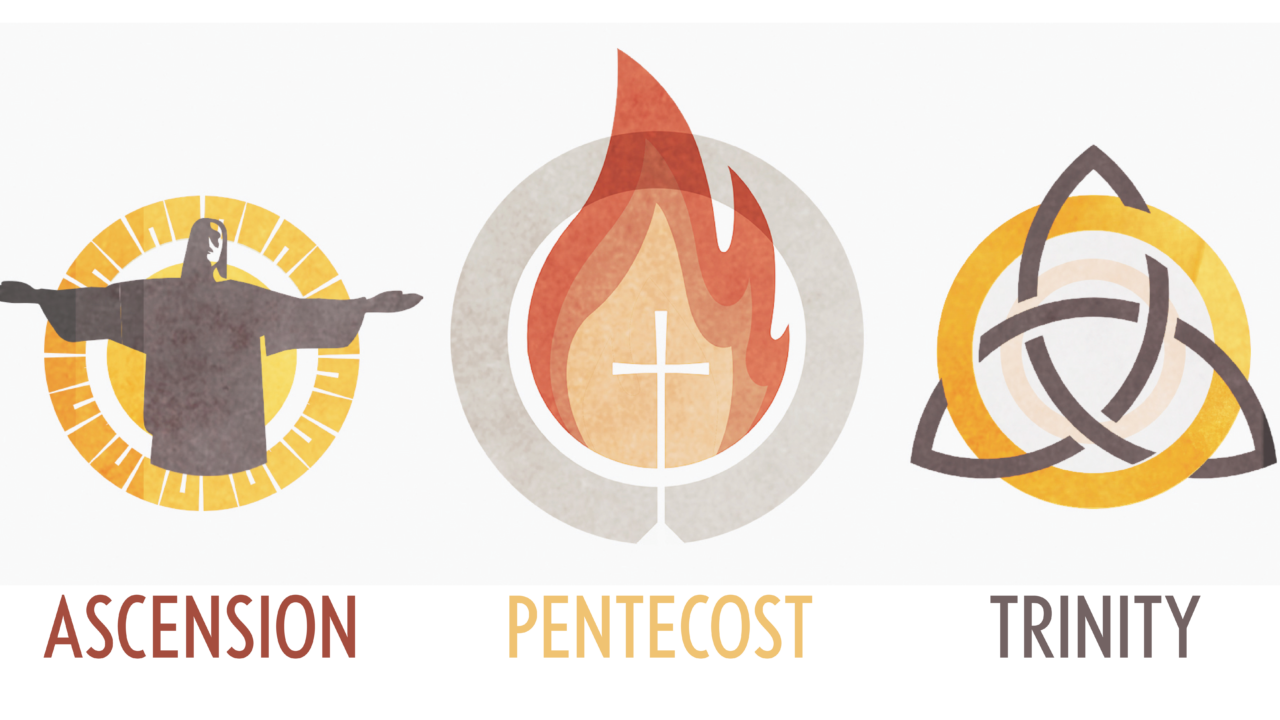
Transcript
Search it, or tap a time to listen from there.
So I was 15 years old and I knew exactly what I wanted to do with my life. Had nothing to do with being a pastor. I wanted to be a basketball star. Not the best that's ever lived, but good. Extraordinary even. Played Division I basketball. That was my goal in life. I would dribble the basketball around my neighborhood constantly, dribbling it the half mile loop around the neighborhood. I would have brought it to the dinner table, but my mom didn't let me. I brought it to bed with me sometimes. I played outside in my driveway in Minnesota winters until the ball was so cold that it was like lead, it would no longer bounce, and my fingers were literally on the verge of becoming frostbitten. I was dedicated.
Basketball was not just a game. Basketball was life. Basketball was love. Basketball was a ticket to being noticed, to being admired, to being popular. Oh, to hear the Edina East cheerleaders yell in unison, Woodley, Woodley, he's our man. If he can't do it, nobody can.
Which I did hear eventually in my senior year. So long story short, I just didn't have the mechanics for the long range shot, so I never made it to the big leagues. But that's another story. So, during this time, my quest to be a great basketball player, there's this thought, like a voice in my heart, I don't know how to describe it, it just kind of like worked its way in there. At the time, it felt like a little worm working its way into my brain, and the voice said something like this, no, you weren't made to play basketball, you were made for love. You were made to be loved and to love in return.
Now that was disturbing for two reasons, well three really, one, I didn't know where this voice was coming from and it was really weird, secondly, it was also disturbing because that would mean I wouldn't necessarily have to give up basketball, but I'd have to reorder my life. I'd have to take the most important thing in my life and dethrone it, demote it. And the third reason why it was really disturbing is because I felt like I could become good at basketball, I felt like I was a hopeless wreck at becoming good at love. So it was just not possible, my life was so twisted and deformed by lust and anger and just pettiness and selfishness and being turned in on myself, I could never do it. So long story short, eventually I wrestled with that voice and then I surrendered to that voice and knelt by my bed and said this muddled, incoherent prayer and asked Jesus
to come into my heart or whatever I was supposed to say and he did. And I met the triune God of love. And I discovered that the rest of my life I would be enrolled in the triune God's school of love. That it would be like, the rest of my life would be like living by the crackling fire of the triune God of love, receiving his love and learning to give that love to other people.
I want to talk about the triune God of love and I want to make three statements that I want to explore together. And they don't seem to go together, but I think they do. So the first statement is God is love. The second statement is God is trinity. And the third statement is God is a consuming fire. How do those tie together? Well they're all in the Bible. They all come from the Bible and I think they do all point us to something in the nature of our God that's really important for us this morning. So the first one, God is love. And if you have your Bibles, turn with me to the first letter of John. It's on page 1023 in your Bibles. And this is written by St. John, the man that wrote the Gospel of John. And he's probably an old man at this point, thinking back, looking back on his life.
Things are getting really simple. Things are getting really clear for him. And he's talking about what really matters in life, you know, what really matters. When you get to the end of your life, what do you want to leave behind? What kind of legacy do you want to leave behind? Really important questions. And so John is coming from that place, I believe. And notice what he says in verse 7. He says, Beloved, let us love one another, for love is from God. And whoever loves has been born of God and knows God. And I love that little phrase, love is from God. Where does it come from? Did we make it up? Did we come up with this? You look at the history of the human race on this planet. You think we made it up? I don't think so. God is the source.
God is the author from which all love flows. Verse 8, he says anyone who does not love does not know God because God is love. Now he's going to say that little phrase two times, God is love. Now, throughout the history, the church has wrestled with that. How can you say God is love? How could you say God is love like before creation when there was nothing? How can you say God is love? It doesn't say God is loving. That's really cool. That's important. God is loving. God is this. God is that. But it says God is love. There's something in the life of God that's love, that's loving, that has loving relations. So where is that? Well, we'll talk about that. Verse 9, in this the love of God has been made manifest among us. In other words, God says, you want to know what love looks like? I'm going to show you because you couldn't figure this out.
You know, I know I made you all really smart, really resourceful. I made you in my image, but you couldn't figure this out. I have to reveal it to you. I have to show this to you. In this is love. And so this is really important here because love is not just some like empty bucket that we can fill. It's a concept that we fill with whatever we want. God has meaning that he's already put into love. He's already defined it. He's already given examples of it. And so it says in this, the love of God has been made manifest among us that God sent his only son into the world so that we might live through him. God, the father sent God, the son, God, the son went willingly.
That is at the very nature of God. God sends. God gives one of the most famous verses in the Bible for God so loved the world that he gave his only begotten son. There's something in the very nature of God's inner life that is giving, that is outpouring, that's flowing out, that's ecstatic, that's looking outward. Verse 10 in this is love. Here it is in this is love. Wow. That's this is going to be important. Not that we have loved God, but that he loved us and sent his son to be the propitiation for our sins. So you want to look at love. You want a good example of love. You want a good model of love. Don't look at yourself very long. Take one look at yourself, one glance at yourself, and then you go, oh yeah, okay, I'm not very good at this. And then take 10 gazes at God's love. In this is love.
We know it from him. He loved us and sent his son to be the propitiation for our sins. I'll talk about that word propitiation in just a minute. So verse 16, jump down to verse 16. So we have come to know and believe the love God has for us. God is love. In case you didn't hear me the first time, let me say it again. God is love. And we have come to know and to believe the love that God has for us. Something shifted inside of me when I was back in my bedroom, back in suburban Minneapolis, when I came to know the love that God has for us. And something shifts every time when we know, when we know and we feel and we know deeper than knowing and feeling that God loves us.
Do you know that? Before you walked into this room, before you decided that I'm going to go to Church of this morning, before 2023 began, before you left your mother's womb, before the foundations of the earth, the Bible says, you were loved. That's the message of first John here.
And you say to yourself, well, okay, I'm, I'm not very impressive. I don't look like Jesus. I haven't gone very far in this school of love. My heart's kind of cold. And yet look at this in this is love. Verse 10, he said to his son to be the propitiation for our sins. What's that word propitiation was a really big word. It's got all kinds of implications to it, but let me just try to define it in about 15 seconds. It just basically means that God took upon himself the rightful judgment and wrath against human sin. He didn't let it just fall on us. He took it upon himself in his very life as a triune God.
He carried that. He took it so he could be just and the justifier of those who are sinful. So God is love. God is Trinity. It's a second statement. So there's a wonderful little book written by a guy named Michael Reeves called delighting in the Trinity. And it's just a, it's a short book. It's an easy read. It's really fun to read and I'd recommend it, but he's got this wonderful quote in there. He says, God is love three. Those three words cannot be more bouncy. They are as warm as a crackling fire.
God is Trinity. That sounds cold and stodgy. The truth is God is love because God is Trinity. The Trinity is the crackling fire. The triune God is the crackling fire that when we come near to this God, our hearts are warmed and lit on fire with his love.
Why the Trinity? It's just sounds so, it seems to complicate things, right? I mean, Jesus was simple. He's a simple guy. I've often met people in, in my churches and walks of life, they go, Jesus was simple. I like Jesus. He's simple. But then, I don't know, the church made everything so complicated. Trinity, it's so complicated. Well, here's the thing though, Jesus believed in the triune nature of God. Our gospel reading, I don't know if you've heard that, but Jesus says this, he gives us the name of God. He says, therefore, go make disciples of all nations, baptizing them. Now baptizing someone, you're initiating them in the faith, the Christian faith. So this is really important. This is how you're going to begin. This is how you're going to live the whole rest of your Christian life. You're going to be immersed in this particular life. Baptizing them in the name, not name za, but one name, singular, the Father and of the
Son and of the Holy Spirit. So throughout the Bible, you see these, what some people have called footprints or traces or clues of God's Trinitarian life. But then sometimes it's just like, boom, like just like right in your face, like this, where Jesus says, baptizing them in the name of the Father and the Son and the Holy Spirit. It's important to see that the church didn't read this into the Bible, but they read it out of the Bible. They were the early church as they were wrestling with this issue, you know, they were following the clues, they were following the facts. So one of my favorite genres is the murder mystery. So I love reading murder mysteries, watching murder mysteries on TV. And so to have a good murder mystery, you got to have a murder, right? I mean, it always starts with a murder. Somebody gets killed. Hopefully it's tastefully done. It's not gory, but hopefully it's, you know, well done murder.
And then there's a detective and the detective is watch these shows. They're always like horribly flawed people. You know, they got all this problems, all this baggage, you know, but here's what they got going for them. They are just ruthless in following the clues. They will follow the facts wherever they lead. So the plot takes twists and turns. It sometimes goes against the logic and sometimes goes against intuition and first impression, but the facts don't lie. So they follow the facts. Now, I like to think that that's basically how the early church developed this doctrine that we call the Trinity, how they experienced this because it was experienced before it was a doctrine. So like every good Jew, they believe that God is one hero, Israel, the Lord, our God is one. The Shema, the great Shema from the book of Deuteronomy. And then, well, stuff started happening. Like for instance, Jesus happened. It's like, whoa, what do we do with him?
You know, so he's doing this stuff and saying this stuff. It's like that the God of Israel said and did like, look at our gospel reading again. If I'll just read it, read you some highlights. So verse 17, they worshiped him. You're a good Jew. You don't worship a human being and nobody blinks. Nobody blinks. Jesus doesn't blink. He doesn't say, no, no, no, no, no, no, no. Don't do that. Don't do that. That's wrong. And then it says, he says, all authority has been given to me on heaven and earth. All is pretty big. That's a lot of authority, like all. Is there anything that's not included in all? And like who gave it to him? Where did it come from? Who's the giver of this? And then verse 20, I am with you always, even to the end of the age. Who says that? Like I have, you know, good friends and you have a, you know, if you're married, you have
a spouse, you have, you have, you have children, you have parents, but you can't say that. I will be with you always to the end of the age. No, you won't. Nobody can do that for another human being. But here's Jesus standing up. I'm with you always to the end of the age.
You see how he is God from God, light from light, true God from true God, as our Nicene Creed says. Father, son, and Holy Spirit. So why do we say that God is love? Well, we follow the clues. Is his name of the Trinity arbitrary? No, we're just listening to Jesus. Is it some kind of relic of a patriarchal culture? Well, no, I don't think so. And if it is, it's a really weird kind of patriarchy because here's the father, the Lord, the king of all. And he's always giving. He's always laid down his life. He's always pouring out. He's washing feet.
Strange kind of patriarchy. God is love. So why do we say God is Trinity? First, because Jesus said it. Second, because there's something about that little phrase, God is love, that has the church has just always wrestled with. And it's really intrigued the church and trying to figure that out. God is love. So what was God doing before the creation of the world? Who was there to love?
Who was God? What kind of loving relations did God have? And why did God create the world? Was he lonely? No. Look, Jesus tells us why, what was going on before the creation of the world, before there was anything, before there were planets, before there were stars, before there were you and me, before there was life, before there were human beings, before there were animals. What was going on? In John chapter 17, verse 24, Jesus says, talking to God the Father, God the Son, saying, you loved me before the foundation of the world. Before there was anything, there was God. And God was loving God. God was a relationship of loving relationships. That's the only way to say it.
God is love in his essential being. So God, before creation, God the Father has always delighted to have another beside him. The very nature of our God is generous, giving, outgoing, honoring, loving. Always has been, always will be, taking pleasure in giving to rather than taking from. And God embraces us into this love.
God is the triune, God is the crackling fire that lights our hearts on fire with his love. So, okay, we've got God is love, we've got God is trinity, God is a consuming fire. Wow, that doesn't sound loving. So that phrase, exactly as it stands, appears three times in the Bible, twice in the Old Testament book of Hebrews, chapter 12, verse 29, our God is a consuming fire. So I had a theory about this, and I did some research, and actually my theory was right, fortunately. So the church has understood this in a very particular way, meaning this. The triune God of love will, if we let him, consume all that is disordered, disfigured, sinful, petty, selfish, lustful, hateful within us. Our God is a consuming fire, but it's a refining fire of love. So when you surrender to him, when he embraces you with his love, he will transform you. into a person who loves him and loves others.
Somebody gave me a book, a novel to read called This is Happiness. And it's set in Ireland, maybe 60s, 70s. And there's a 16-year-old boy named Noel. And Noel is involved in a really terrible accident. And he breaks a bunch of bones. He has to go to the doctor. And the doctor's daughter, Sophie, is his nurse. And he immediately falls in love with her as she's taking care of him.
And it changes Noel. And he says this as she's kind of caring for him and tending to him as a nurse. He says, right then, more than anything, I want to be a better version of myself. I want to be a knight. I want to carry the book of virtues and be honorable and wise and kind and heroic and whatever handsome is.
I love that. And he says, but because I'm not all those things, the pain is sharp and true because it is the pain of myself. That really moved me. So it's a really minor but powerful illustration of what happens when we meet the triune God. And that is that it elicits something out of us when we are loved. As John says in 1 John, he says that we, verse 19, we love because he first loved us. So when we know we are loved, when we know how deeply we are loved, it brings out of us this desire to be loving. So chapter four, verse seven, let us love one another. Verse 11, beloved, if God so loved us, we also ought to love one another. It makes us cry, make me loving as you are loving, triune God, make me like that.
C.S. Lewis in his book, The Problem of Pain, he has this incredible chapter about this little verse, our God is a consuming fire. And he says, because God loves us, he will work to make us lovely and loving. He's like an artist that loves her painting and labors to make it beautiful. And if the painting was a living being, it might say, hey, enough already, I'm done, it's fine. I think I'm very fine, I'm very content with this painting right now, which is me. And the artist says, no, no, no, no, no, we're not done yet. He said, God is like that artist, or God is like a friend that loves you too much that when you're being dishonest or when you're being a coward, will not confront you. That's the nature of the triune God. And Lewis says, and I quote, we don't have a God that drowsily wishes you to be happy in your own way,
but the consuming fire himself, the love that made the world, because he already loves us, he will labor to make us lovable and loving. We see the nature of the triune God. He wants to make us have his character. As the New Testament says in many places, put on Christ, which is to put on the triune God. Now, here's the thing, when it comes to love, none of us are experts. So when I was 15 years old, and I had that disturbing thought, that thought was right. I am not very good at loving, and I don't know if I'll spend a lifetime on it, I hope it'll get better, but I'm still gonna need help.
The triune God calls us to forgive, and we carry anger and resentment and bitterness. The triune God calls us to a life of generosity, and we easily hoard. The triune God calls us to be kind. I've said some very unkind things this week. The triune God tells us, judge not, lest you be judged. I've judged some people based on very limited knowledge this week. The triune God says, speak the truth in love, and sometimes I've been too cowardly to do that. You see the need for transformation
that is involved in our God is a consuming fire. So I was reading this week, I was thinking about this sermon. Well, actually it was about nine o'clock last night, but I was thinking about this sermon, and the verses in Matthew chapter 24 came to my mind. And it just stopped me in my tracks. I thought, oh my goodness, this is exactly the moment we're in. As a society, as a world. So Jesus is talking in Matthew chapter 24, he's talking about a time of tribulation when you will be hated by all nations for my namesake. And then he goes on to say, and many will fall away and betray one another and hate one another, and many false prophets will arise and lead many astray. And because lawlessness will be increased, the love of many will grow cold. I just, that little phrase, the love of many grow cold, it just stops me every time I read that.
It's such a warning. And do you feel that in our culture today? I don't know, I do. Do you feel that in our country? Maybe some of you, maybe your love is growing cold to somebody, maybe somebody here, maybe a friend. Your love is growing cold. It's just so easy to do. So I say, come to the fire of the triune God of love. Let him, as St. Paul says,
pour into your hearts through the Holy Spirit, the love of God the Father. Let him pour it into your heart and forgive you and cleanse you and renew you. And so where are you gonna find that? Where are you gonna go? Where is this school that I've been talking about? Well, it's right here. The church is the school of love.
Imperfect as she is, flawed as she is, the church is the school of love. And worship is our main course of love. Listen for it all throughout the service. Bishop Stewart, very beginning of the service, blessed be God, the Father, the Son, and the Holy Spirit. Then Bishop Stewart will lead us in the Nicene Creed and the confession after we confess our sins and the Eucharistic prayer. It's all about coming to the fire, the crackling fire of the triune God of love.
St. Augustine wrote a book on the Trinity. He was a fourth century African bishop, wrote this tome on the Trinity, which I haven't read, but I've read a few lines out of it. And so one in particular, he says, let us walk together the street of love, which is the Trinity, the triune God, seeking together the one who told us to seek him.
And I love that because church, we are on that street together. That's our street. Sometimes you come here rejoicing. Sometimes you come here weeping. Sometimes you come here virtuous. Sometimes you're feeling the weight of your sin. Sometimes you come and your life feels really beautiful and coherent. Sometimes it just feels very ugly and chaotic. Sometimes you just feel weak and fearful. Sometimes you feel bold and confident, but you are never alone, never without hope, never unloved, never stuck in your unloveliness.
The triune God of love is calling you to his crackling fire. St. John says, God is love. God is love. In the name of the Father and the Son and the Holy Spirit. Amen. Amen.
Three Great Feasts 2023
3 sermons
- The Power of the Ascension
Texts: Acts 1:1-11, Psalm 47, Mark 16:9-20
- Wind and Fire
Texts: Acts 2:1-21, Psalm 104:24-35, John 14:8-17