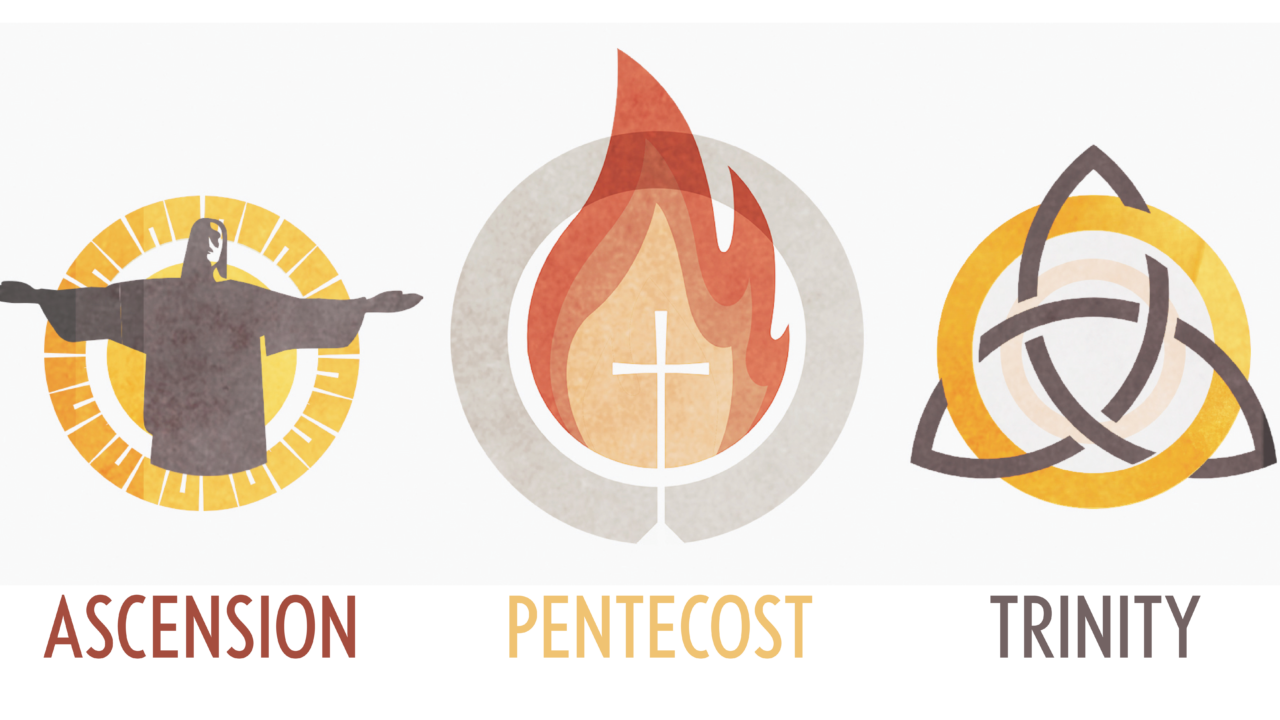
Transcript
Search it, or tap a time to listen from there.
You can turn to page 909 in your sanctuary Bible or Acts chapter 2 if you brought your own Bible. Some of Jesus' favorite ways to describe and images and symbols and stories that he used to talk about the reality of heaven and heaven coming to earth were images borrowed from agriculture. So you think of him saying things like, the kingdom of heaven is like a seed, and a seed grows.
On Pentecost we celebrate the birth of the church, and from the beginning we see that God wants his church to grow. If you're there in chapter 2, look at the end, verse 41, after Peter has preached a Those who received his word were baptized, and they were added that day about 3,000 souls.
So after the portion that we heard read, Peter continues his sermon. He makes a call, and 3,000 people respond to believe and to be baptized. And so this is so obvious that we might miss it, but one of the lessons of Pentecost is that God wanted his kingdom to grow and to increase, and that is still true today. God wants his kingdom to grow, to expand, to increase.
At the ascension, Jesus said, the Holy Spirit will be poured out upon you, and the Holy It's also good for us to remember that the word translated spirit can also be translated breath and wind, and so when we look now at the beginning of chapter 2, there is a mighty rushing wind. So it says, on the day of Pentecost, they were all together in one place, and suddenly there came from heaven a sound like a mighty rushing wind, and it filled the entire house in which they were sitting. There in that same upper room where they'd had the Lord's Supper just a couple months prior.
So this mighty rushing wind, it might be like a microburst if you ever were caught in a microburst. This mighty down rush of wind that was such a strong phenomenon that it draw the attention of men from all around the city, and they came running to that place, and they said, what is going on here?
But that mighty wind, where did it come from? It started as a breath. On the day of resurrection, when Jesus' body was still in the tomb, dead, at some point in those early hours of that first day of the week, the Father breathed life into His and He came alive again, never to die.
Just as in the very beginning, God made Adam from the dirt, and then breathed life into Him and He became a living being, so too, Jesus received the breath of everlasting life, He came alive again, never to die again, and then that same night, He appeared to His disciples to the eleven, and the breath that He received, He shared. That resurrection life, He received, He shared, and it says He breathed on them and said receive the Holy Spirit. Now, if I had more time, I'd tell you all about the festival of firstfruits, which is a Jewish festival, and how that happens right after the Sabbath, after Passover. Actually, no, it happens right after the first harvest of grain, and then Leviticus says seven weeks later, after that offering of first grain, then when the full harvest comes in, because Pentecost is a harvest festival, when that happens, celebrate the feast of So here we have Jesus receiving the firstfruits of His own life, sharing that with His disciples
on that day, and then exactly seven weeks later, the breath He receives and the breath He shares becomes a mighty rushing wind of resurrection life, and the power of the Holy Spirit upon those 120 who were gathered there in the upper room. The wind, the breath becomes a wind, it's growing, it's expanding in power, and in the number of people it's touching. What was a breath is now a mighty rushing wind, so powerful it's drawing the attention of people around the city. Amazing. I would have liked to have seen that.
The Bible also says there was fire, and that the fire together with the wind was the sign to the disciples that the Holy Spirit indeed had been poured out, He had been given, He is here. And you wonder, what did it look like?
The flames above their heads, how big were they? How long did they stay there? Did they last only as long as the wind was blowing? It was wind and flame, like when you blow into the coal at a campfire and all of a sudden the flame shoots out big and then you take away your breath and the flame dies down? We don't know. We can wonder. I would have liked to have seen it. But why fire? Wind we understand because it's synonymous with the Holy Spirit. Why fire? Well, earlier in chapter one, again at the ascension before Jesus went up to heaven, he said, John the Baptist baptized with water, you will be baptized with the Holy Spirit not many days from now. So he said, this is going to happen soon, so wait until it happens. But when Jesus said, John baptized you with water, that helped the disciples remember something else John had said.
John said, I baptize you with water, but one is coming who is mightier than me. He will baptize you with the Holy Spirit and with what? Fire. So they remember what John had said and they're remembering that the word for wind and spirit is interchangeable and so it's as if John the Baptist was saying, one is coming who will baptize you with the Holy Wind and with fire. So there they are feeling the rush of wind and knowing this is it. We've been baptized. We have the Holy Spirit. He is here. The promise that Jesus made has been fulfilled just 10 days later.
So the 120 first disciples, they received the Holy Spirit, but God's not done yet on that day. He wants his kingdom to expand. He wants it to grow. He wants it to touch others who are not yet there in the room. And so people come, the disciples start speaking in other languages. And again, if I had more time, we could talk about how this is the reverse of Babel, right? Babel, the confusion that came from many languages here, many languages is bringing understanding. And at Babel, they wanted to stay together. They said, let us build this tower so that we will not be dispersed. But instead they were dispersed because of their confusion here after Pentecost. The disciples are dispersed all throughout the world, but not because of disunity and confusion, but because of mission and unity in the Lord. So the tongues are going all different languages. The people that are attracted to the sound of the microburst, the Holy microburst, they're
saying, I understand what they're saying, even though these people, these men, these women, they're from Galilee. And I grew up in Crete or I grew up in Mesopotamia or I grew up in Elim. Is that where Elamites come from? I don't know. And I understand what they're saying.
And so the crowd heard. And what were the disciples saying? They were extolling the mighty works of God. They're talking about what Jesus had done. And people were astounded, although some scoffed and made fun of them. Well, Peter didn't get embarrassed. He didn't get mad. He got excited. He said, well, let me use this opportunity. So he stands up and he says, these people are not out of their minds. They're not drunk, as you suppose, they're actually filled with the spirit of God. And then Peter goes on to preach this sermon where he talks about Jesus, the one you knew because he was attested by many mighty works whom you also crucified. He kind of makes a point to come back to that often. You crucified whom you killed, the one you murdered. He says that about three or four times throughout the sermon. No wonder they're cut to the heart at the end. But he says this Jesus, whom you crucified, he died for the forgiveness of sin.
But he was raised to new life. And Peter said, those of us here, we've seen it. The hundred and twenty of us here, we saw him raised from the dead. So we know it's true. And as Peter proclaimed it, faith was born in the hearts of the hearers. They said, it is true. He really is the king and the Messiah. And I really did assent to killing him. That was bad. Now what do we do? Look at the end. Verse thirty seven. They were cut to the heart.
And they said to Peter, brothers, what shall we do? And Peter said to them, turn around, turn away from the life you're living, the things you're pursuing, the sin that you are engaging in. Repent, be baptized. And you also will receive the forgiveness of your sins and the Holy Spirit, for he says, look at this in verse thirty nine, the promise referring to the Holy Spirit, the promise is for you and for your children and for all who are far off, everyone whom the Lord our God calls. God wants his kingdom to expand.
It's interesting because in the Old Testament, the spirit came on certain people at certain times. And Peter might have thought, well, that's just what this is happening. But instead, because he was filled with the Holy Spirit, he said, no, this has to keep going. This is something new and different. And this is for everyone who believes. So let me pause here and just say. If you're not a part of the kingdom of Jesus, Jesus's kingdom.
Then at least walk away knowing this. He wants you to be. Jesus wants you to be a part of his kingdom. He wants his kingdom to grow and expand by having you become a part of it. And you can do that at any time.
If you're here and you already are in the kingdom of Jesus, you're a Christian, you're a follower of Jesus. Then one of the beautiful lessons we can take away from the mighty, the breath that becomes a mighty rushing wind is that there is more.
God has more for you. He has more in store for your life. He has more meaningful work that he wants for you to do partnering together with him. There is more. There is more joy. There is more love. There's more freedom. There's more faith. There's more power. There's more peace than you have yet experienced. And that's not a chastisement on you. That's an invitation. One of my favorite passages referring to this reality is from Ezekiel 47 where Ezekiel describes the temple and from it, from the side of the temple is flowing this little trickle, just a little stream. And that without any other tributaries flowing into it, the stream of its own accord grows in strength and volume so that where at first it's ankle deep, then it's knee deep, then it's waist deep, and then it becomes a rushing river that you cannot swim across.
And it's bringing life to the dead sea. Fish start living there. It's bringing life also to the desert. The Holy Spirit. You have the Holy Spirit if you believe in Jesus, but there's more. Ankle deep, knee deep, waist deep, a rushing river that cannot be crossed, bringing life to dead places in you, dead places in you, but also through you to the dead places around you.
As we look again at our passage, we see God's invitation. It's expanding. It desires more. It wants all and everyone. Listen just to the number of times over and over again. It's like a barrage where we hear the words, all each, everyone gave verse one. They're all together in the upper room. Verse three, tongues of fire, a light on each one, each one and everyone there. Verse four, they're all filled all the disciples and they're all prophesying. And then when Peter begins his sermon and he's quoting from the prophet Joel, he says, in the last days, I will pour out my spirit on all flesh, sons and daughters, young and old master and servants, men and women. Everyone who calls on the name of the Lord shall be saved. And again, what we already read, but the end of his sermon, he says, repent, be baptized every one of you for the forgiveness of sins and you will receive the Holy Spirit.
This promise is for you and for your children and for all who are far off, everyone whom the Lord our God calls to himself. Wow. All each, everyone, all each, all the time throughout that whole passage. Do you hear it? God's heart to expand his kingdom.
God's kingdom is for everyone, for each, for all. Now, in our culture, there is a value word that you've probably heard and just sit tight with me. Okay. I'm not going to. This is not going to get as bad as you are fearing, but let's talk about inclusivity for a while because that is something our culture deeply cares about. And first, let's understand what's good about this drive towards inclusion and inclusivity. What's good about it? Well, we've all had an experience. I'm sure you have of being left out of something, wondering, do I belong? Do I fit in? Is there a place for me here? Or maybe I'm the only one you've probably also had the experience of being brought in of somebody saying, I see this in you or you have something to do here, or there's a part for you to play or get off the bench, get in the game or join us.
We're going out for dinner. I was just this week listening to NPR and there's people telling stories of those in their lives who had, you know, a transforming effect on them. And the man was about 60 years old, who was telling the story, recalling a time when he was a young teenager and he'd been invited to be a part of this conference for gifted and talented and bright young people. And so he was there thinking, this is amazing. I get to be a part of this. Who am I to be here? This is so wonderful. It was so exciting getting to know all the people. And then the conference ended and then everybody just kind of left. They formed groups and they started walking away, going to dinner, going to get ice cream. And he was left all alone and he went from feeling special and involved and engaged to really insecure and wondering, do I have a place?
And at that moment, one of the groups walking away to go get dinner, a young girl turned around. She saw him and said, Hey, called his name. Come with us. You come too. And he said, after that, I wanted to find ways to do what she did for me, to do that for other people for the rest of my life.
So he became a psychologist because he felt that was one way that he could help others understand belonging and acceptance. So I know we get nervous. We have our hesitations about inclusivity because yes, there are ways that it's being used to persecute Christians in the workplace is that that idea is being used at every stratum of society to persecute Christians. You will be persecuted because of inclusivity. But what I'd like for us to do is understand that the heart of this is a primal fundamental need that we all get. And if we can get that and bless that and then begin to understand, okay, but what is not right about how the world is using this term, then we'll be better equipped. We'll be better equipped.
I just heard this week, I met a young man who started coming to this church recently because he was invited by a coworker and the coworker, another young man going to this church found out this guy was just looking for friends. So he said, well, come, come to Harbor. There's a bunch of people our age come to church. And this young man is coming and he's saying, I'm loving being a part of this. It's clear that he's still working out what he thinks and believes about everything. But he's here because somebody said, you too, come be a part. It's beautiful.
So is God inclusive in this ever expanding kingdom that is truly for all and for everyone? Yes, absolutely. Is it also true that God is inclusive in a way that is different from how the world talks about inclusivity? Well, yes, that is also true. So let's talk about that for just a little bit. So true. God desires all people to come to him, but it must be on his terms. And that's the key difference.
You come to me. You are welcome, but you come on my terms. Look at verse thirty six. Peter's preaching and he's getting towards the end of the sermon. And again, one of the this this guy that you crucified. Let all the house of Israel therefore know that God has made him both Lord and Christ. That is Messiah. That is King. This Jesus whom you crucified. He is Lord and he is King. And Peter exalts and he says, everybody is welcome. Everybody can come, but you must acknowledge and believe Jesus is Lord of all of all the heavens and all the earth and of my life. He tells me who I am and I conform my way to him. And that is different because it doesn't work to have two lords in one kingdom or two kings in one kingdom.
So God is inclusive, but in a way that challenges our culture's notions of inclusivity. And the Bible is clear. Not everyone will go to heaven. But the Bible is also an equally clear those who will be excluded are those who have chosen to exclude themselves because they've said, if I can't be the Lord.
And the king or the queen. I don't want to have anything to do with it. And God says, that's your choice. I'm not going to force you to be a part of my kingdom. So God. God's kingdom does not conform to me. I conform to the kingdom. And that is also radically different from the inclusivity which says all of the world and society around me must change all the rules and the norms and what's acceptable to bend to me. It must conform to me. And that's fine. And that works as long as you have one person in the room. As soon as there's a second person in the room, it gets complicated. And instead, the kingdom of heaven, God is saying, no, to enter this kingdom, the kingdom does not conform to you. You conform to the kingdom. You conform to me, Jesus says. Again, the world screams, I belong and I am a part and I will be exactly as I will be.
You let me be as I want to be. And God says, I love you too much to let you do that. Yes, you belong. Yes, everyone is welcome and you're accepted. But don't expect to stay the same. Don't expect me to leave you as you are. Expect me to transform you into something better.
So there is a truth at the center of all things that must be conformed to, submitted to, surrendered to. And that truth at the center of all things is Jesus Christ. He is the Lord. We are his servants. He is the king. We are his subjects. He is God and we are his people. Now, those who've been walking with Jesus for a long time, they will tell you, yes, he requires obedience to his commands. Yes, he requires conformity to his ways, but his commands are not burdensome and his way is good.
And there's joy when you release and let go and shift from, well, God, everything will be okay as long as I have this, or sure, you're free to have total reign over my life except for this one thing. And instead we say, no, it's all.
I give all to you and I trust you because I know you love me. So as I conclude, let me speak to those of you, there may not be many, but those of you in this room who are not yet a part of the kingdom of Jesus.
You've not yet said, yes, on your terms, I want to belong to you. You get to call the shots. You've not said that yet. Understand, again, Jesus wants to expand his kingdom. He wants it to grow and he wants that to happen by having you become a part of it. Jesus wants you to be a part of his kingdom.
Jesus wants to wash away the guilt and shame that you feel for every bad thing that you've ever done. Every wrong thing you've ever done, he says, I will forgive you for that. I will wash that away. I will make you clean. That's his promise. And the second promise, just like on the day of Pentecost, and I will fill you with my Holy Spirit, which is life and joy. I will make you a part of my kingdom and my family forever, and you will live forever.
If you want that and you're ready, don't leave today without telling somebody. If you're not ready, you don't have to do a thing except keep coming back and understand that Jesus loves you and when you're ready, he'll be there waiting. To the rest of us who have said yes to Jesus, let me just simply say for us on this feast of the Pentecost, let our prayer today be for more of the Spirit. More joy, more love, more peace, more healing, more freedom, more faith, more power. Ultimately, more of Jesus. Sounds all right to me. How about you? Let's pray. Lord, we pray that you would visit upon us salvation for those who do not yet believe. You'd stir in their hearts that same stirring that you did on that first Pentecost when they said it's true. He rose from the dead. He's the king of heaven.
Lord, would you send us more people who are seeking salvation and would we see more salvation in this church and in our fellowship? Lord, would you also fill this church more and more with your Holy Spirit? Bring us the healing we need, the love and the power that we need. Also send us out to be like the young man who said, you come too. Come to church. Lord, would you increase in us both the opportunity and the desire to share good news with the world around us and let us see your kingdom come, we pray in Jesus name.
Amen.
Three Great Feasts 2023
3 sermons
- The Power of the Ascension
Texts: Acts 1:1-11, Psalm 47, Mark 16:9-20
- The Lifelong School of Love
Texts: 1 John 4:7-19, Psalm 150, Matthew 28:16-20